What Should I Set My Dpi to for My Photoshop Art
The ultimate guide to image resolution
'Image resolution' is a term that crops up repeatedly in the creative industry, but tin frequently leave people scratching their heads – isn't dpi a type of policeman? Why is my 300dpi image blurry? Isn't there a special button to upscale whatever image?
As with any subject field, beginners pick upward fragments of information that will assistance them muddle by and get stuff washed. But many projects been negatively impacted by a lack of understanding of image resolution.
Does this audio annihilation like you? This guide has been written to unravel some of the confusion around the catchy topic of paradigm resolution and help yous talk with conviction on the bailiwick. For paradigm resolution done right, meet our guide to all-time print ads.
- Get Adobe Creative Cloud
What are pixels?
Images can exist described equally either vector or raster, depending on how they nowadays information.
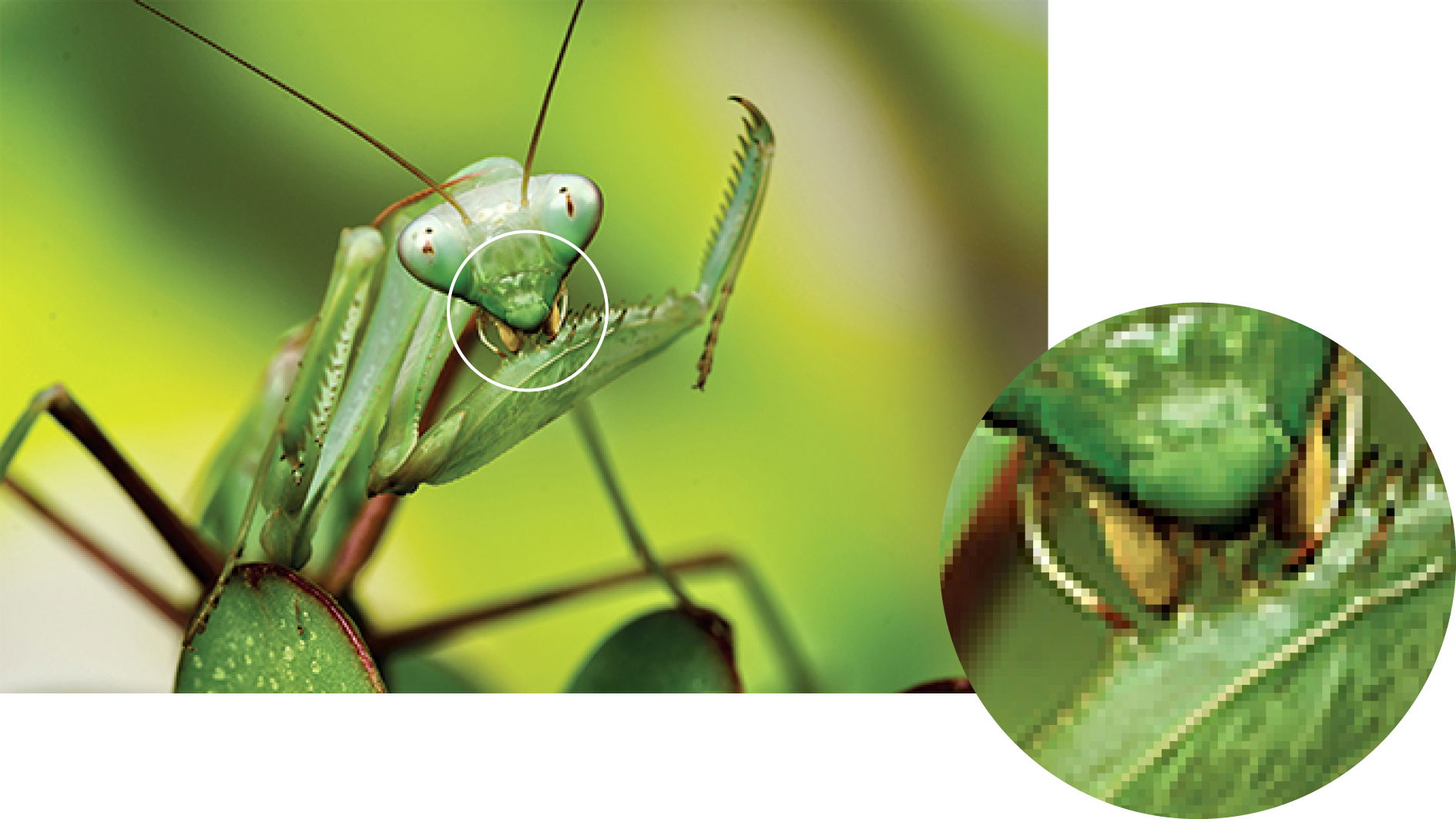
Raster images, sometimes referred to as bitmap, are pixel-based, which means the paradigm is made up of a grid of tiny colored squares, coming together to form a film. Each little square is chosen a 'pixel' and yous can observe these if you zoom far enough into any raster image. Raster images are used to show circuitous images that have a range of polish gradients and undefined edges, such as photographs. Common raster file formats are jpg, png, gif and psd.
Vector graphics are based on mathematical calculations, which allow them to be scaled up and down without any loss of quality. We will not be discussing these, since image resolution is largely irrelevant for them. Read our article on file formats for more information.
What is DPI?
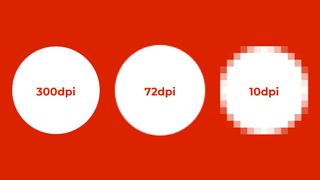
At present you understand what a pixel is, we tin movement on to the thorny subject of dpi. Dpi stands for 'dots-per-inch' and is used in printing to describe the number of dots laid down on paper per square inch – in an paradigm with a resolution of 10dpi, each square inch will be fabricated upwardly for ten smaller squares called pixels. Confusingly dpi is regularly used as the de facto industry term for anything relating to a certain number of units per inch, and then y'all may too come up across ppi (pixels per inch) in digital work, spi (samples per inch) for scanners or lpi (lines per inch) in printing, but these are largely legacy terms and often forgotten. In this commodity we will utilise dpi to describe everything from pixels-per-inch to dots-per-inch (in the same mode many people use 'font' interchangeably with 'typeface' – run into font vs typeface for the technicalities of that statement).
Prototype size
At this bespeak you maybe be thinking y'all've cracked it, a college resolution means a sharper prototype, right? If all images were the aforementioned size then this might be true – but they aren't, they come in all shapes and sizes. The quality of an image all depends on the relationship between pixel density and image size – change one and the other changes with information technology.
The number of pixels in an image is stock-still, unless you get back to the camera and take the photo once more on a unlike setting, and then changing the physical size of the image will change the number of pixels-per-inch. Increasing the paradigm size will result in a lower dpi, pregnant there are fewer pixels to brand up each foursquare inch and the pixels volition get larger to fill up the space. The resulting epitome could end up looking blocky and pixellated.
Imagine filling a small-scale box with flaccid balloons, then tipping the same number of balloons into a larger box. The just fashion to fill the box would be to inflate the balloons, retaining the aforementioned number, only increasing their size. In general, you can brand an image smaller without encountering any existent bug, whereas increasing image size tin can accept disastrous effects on the cease result.
Here are two examples to show the outcome of altering resolution and pixel count:
Example A: Increasing dpi > Lowers physical size
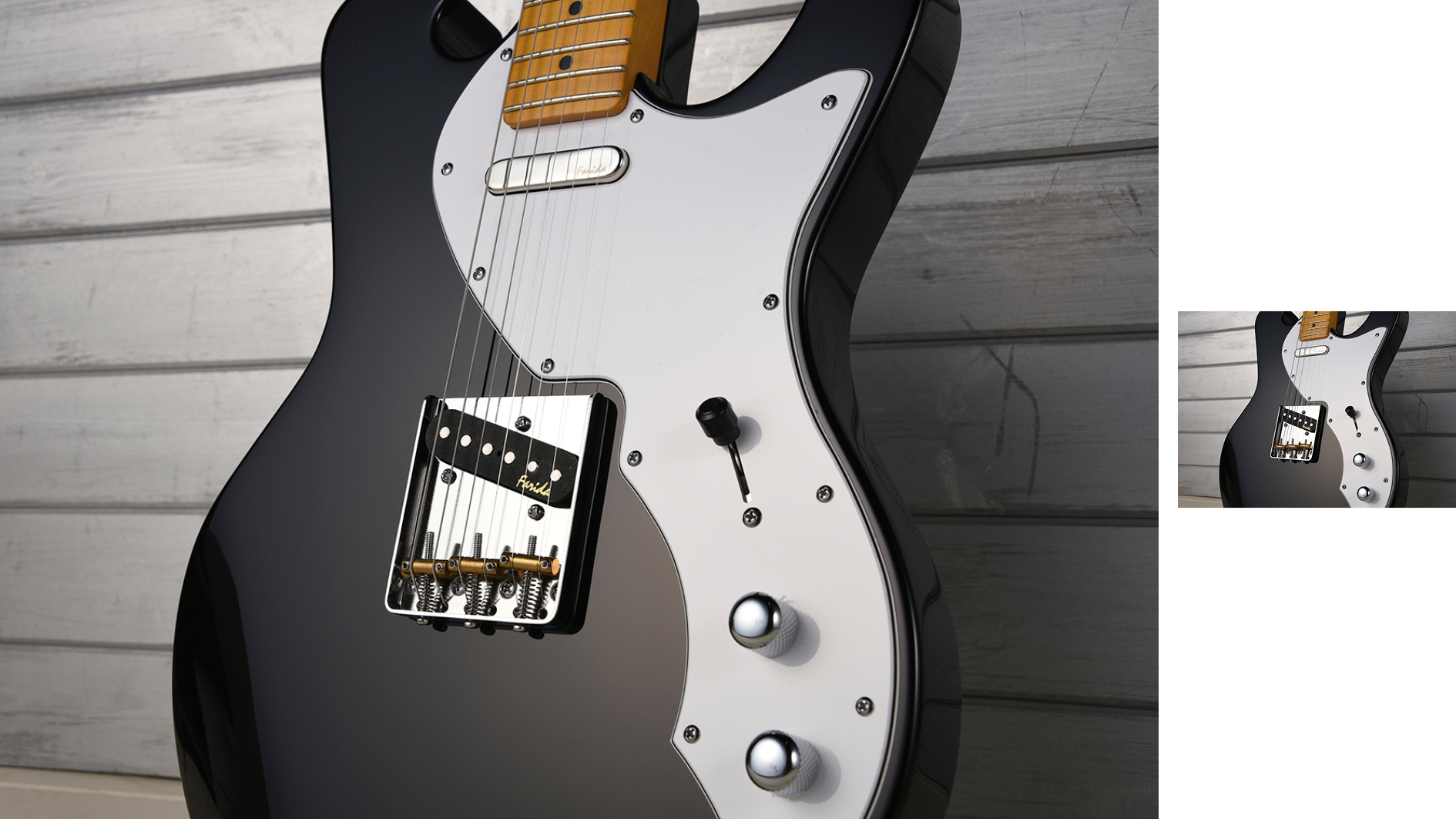
In this situation, both images have the same number of pixels in them, but the image on the correct has had the dpi value raised from 72dpi to 300dpi. At that place are now more than pixels to each inch, but because the number of pixels making up the image remains the same, the image is forced to become smaller. The pixels that make up the paradigm are forced to become smaller to fit more of them into an inch.
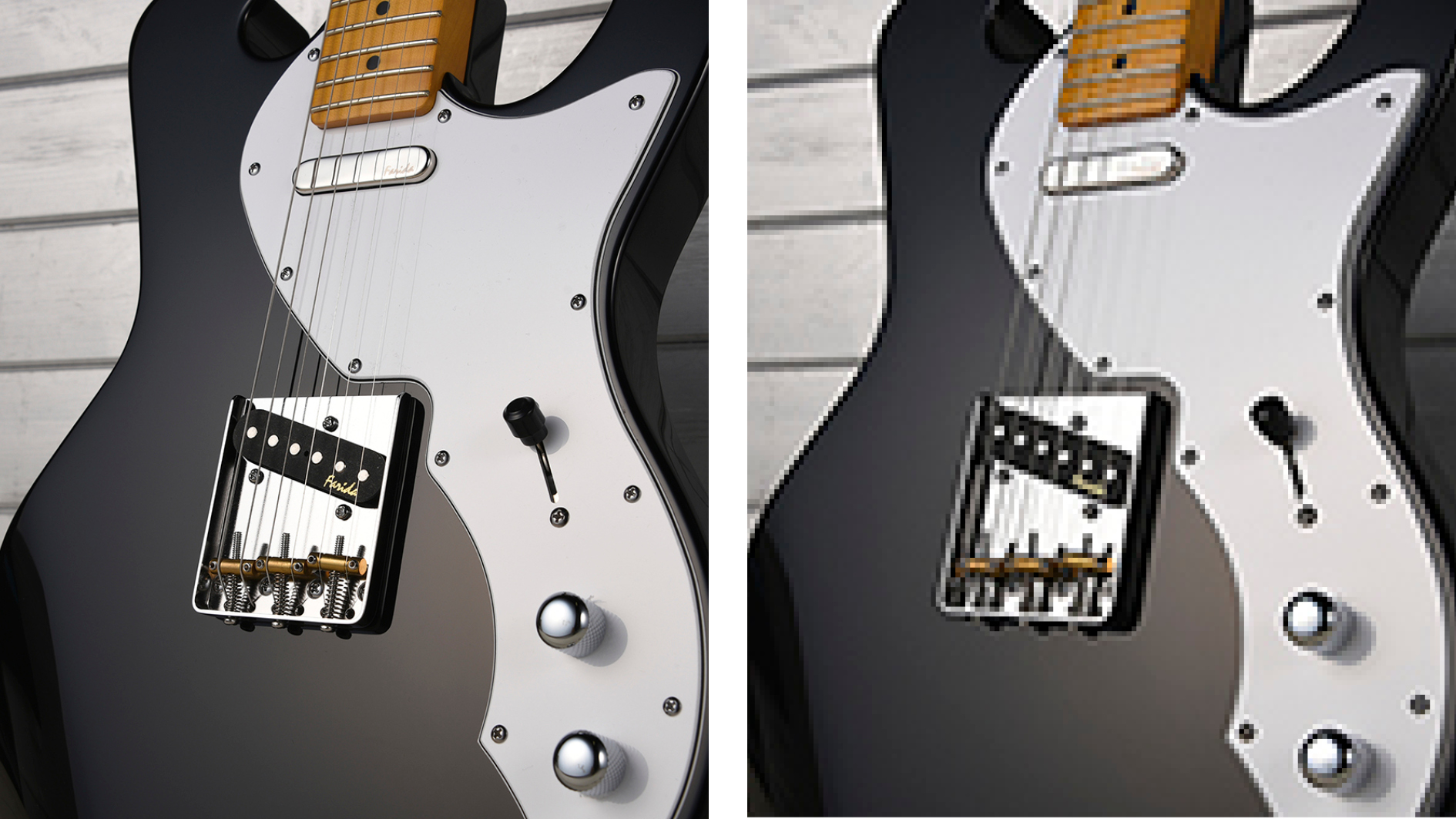
Instance B: Reducing number of pixels > Aforementioned physical size.
Here the image on the right is the same size as the paradigm on the left, but has had the number of pixels reduced. Because there are fewer pixels to fill up the space, each pixel has become bigger and the image has a lower dpi as a result (since there are fewer dots filling each inch). The image becomes blocky and pixellated.
Resampling and Interpolation
In the previous sections, we made the assumption that the number of pixels is fixed and can't exist changed. This isn't strictly true because extra pixels tin can be artificially created through a process called 'interpolation', where the computer analyses the original pixels and creates new ones based on what it thinks would be at that place. For example, if you had a blue pixel sitting side by side to a yellow pixel and wanted to artificially increase the dpi of your image, the computer would use interpolation to add a green pixel in between the two.
Interpolation effectively allows y'all to increase the size of the image, while retaining the same dpi, thus avoiding any pixellation problems. This may sound similar the perfect solution in theory, nevertheless it is unreasonable to wait a computer to produce a perfectly authentic estimation of the missing pixels and this process should be used sparingly.
Instance C: Higher pixel dimensions (interpolated) > Same concrete size > Higher DPI
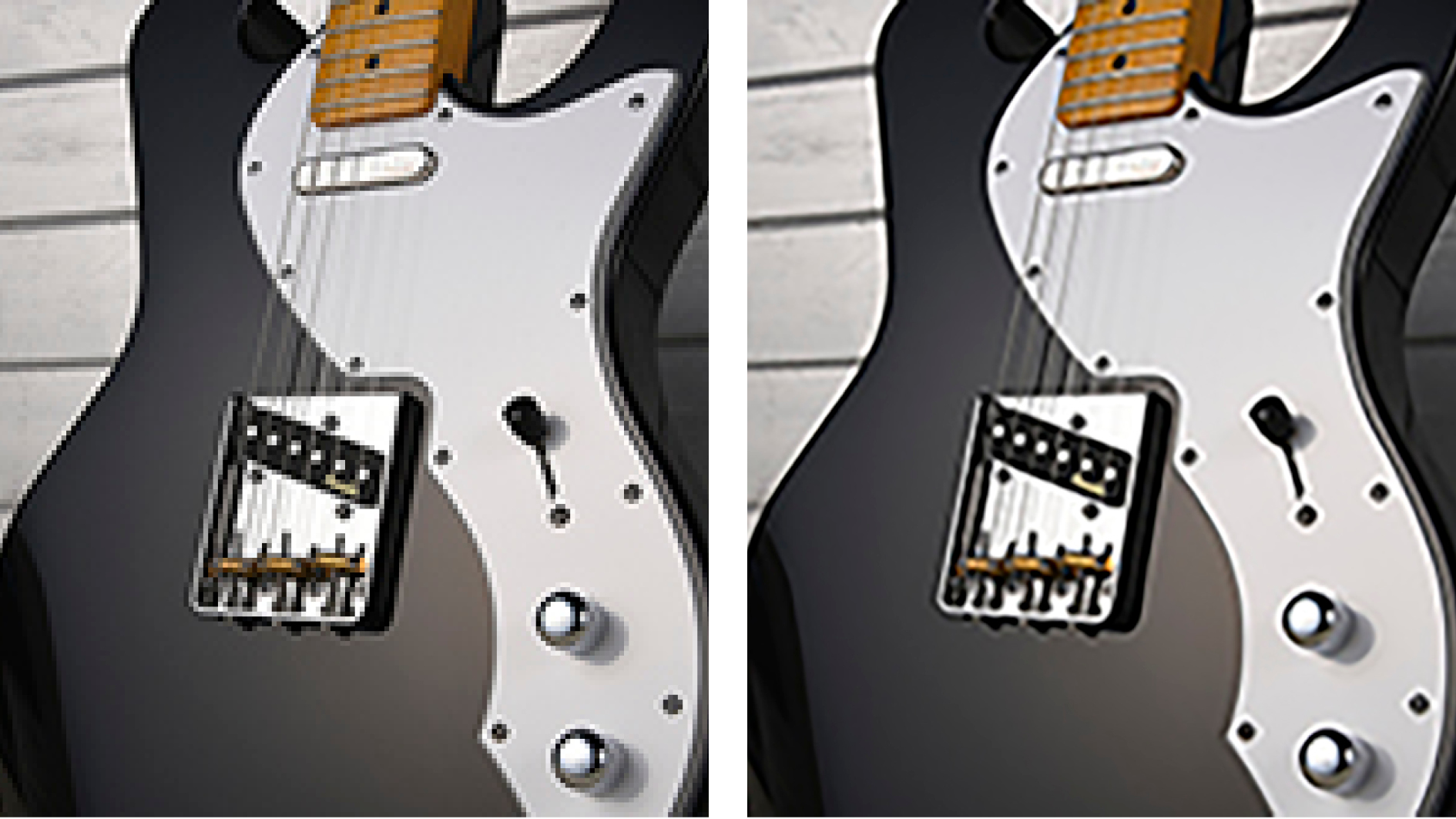
The image on the left has a resolution of 72dpi image, while the the ane on the right has been artificially raised to 300dpi using interpolation, using the information from the image on the left. Although it may look improve, the fake detail cannot compare with the genuine 300dpi image.
What you can practise in Photoshop
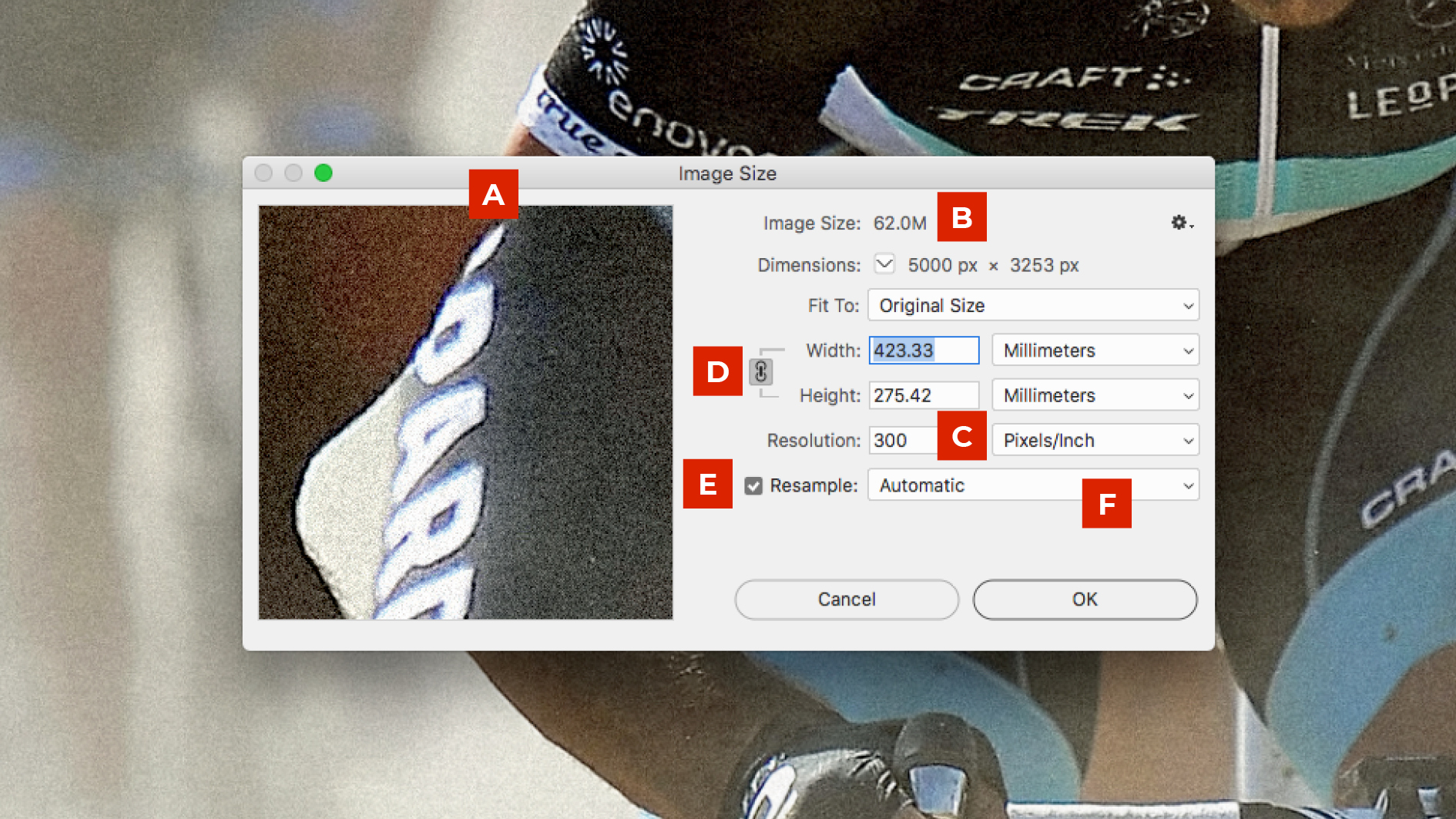
In Photoshop, there are two dialog boxes of particular relevance when discussing resolution and paradigm size: Prototype > Sail Size and Paradigm > Image Size. Canvas Size is used to modify the accented size of the canvas and doesn't alter the prototype (other than to crop it), while the Paradigm Size box is the key to controlling resolution and the image dimensions.
The Image Size box [A] reduces everything we've been talking nigh into three central numbers: Width, Height and Resolution [C]. Each of these options in intrinsically linked, and so changing one will change the others proportionally. When you lot adjust any number, you lot're substantially making each individual pixel bigger and smaller. The file size is given at the height [B], which is useful when you're trying to reduce the image under a certain number.
In issue this allows y'all to set your desired resolution and the software volition automatically show y'all the new width and elevation at that resolution. This is helpful when you want to work out the maximum size at which you can employ an image (you can select which unit of measurement you wish to view the measurements in).
Resampling
Resampling will change the pixel dimensions, using interpolation, by adding or deleting pixels. You can toggle this on and off using the checkbox at the bottom of the Paradigm Size box [Eastward]. With Resampling turned on, you tin set a new resolution without the image size changing (or vice-versa) and Photoshop volition fill in the missing pixels. Constrain Proportions [D] volition mean that the width and acme remain at a fixed ratio, removing the risk of squishing or distorting your epitome.
In that location are diverse methods for resampling in the drop-downward bill of fare [F], abreast the checkbox. If you're unsure which is correct for you, and then Automated is a proficient pick. Two are clearly marked for reduction and enlargement; Bicubic Sharper and Bicubic Smoother. Nearest Neighbour is the merely 1 not to use interpolation, so should only exist used on pixel-perfect images, such as low-res images or pixel art, where you lot don't want the detail to get smeary.
Resampling should, equally a rule, be avoided where possible, since you can lose clarity and sharpness in the epitome. You lot can all the same apply Undo, just it can be useful to continue a copy of the original prototype, in case y'all accidentally relieve a low-res version and lose all that detail.
Impress vs digital
When sending a graphic to print, it is recommended to use a resolution of 300dpi, merely depending on the quality of the prototype and the size y'all're printing to, yous tin often become abroad with using a lower dpi. An A3 photographic epitome may look fine with a resolution of 150dpi.
When it comes to digital, people are often under the impression that the resolution should be ready to 72dpi, but this is only a legacy value and it is image dimensions that are more important, because you are plumbing equipment a grid of pixels (your image) into a grid of pixels (the screen). A 500px x 500px image will e'er be 500px ten 500px, no matter what the pixel density is.
Read more than:
- Impress adverts: the best advert campaigns around
- 7 great places to find impress templates
- The beginner's guide to giclee printing
Related articles
Source: https://www.creativebloq.com/graphic-design/what-is-dpi-image-resolution-71515673
0 Response to "What Should I Set My Dpi to for My Photoshop Art"
Post a Comment